Back to Money

Paychecks, budgets, and interest

The paycheck hits the table. Tax takes a cut. What is left is what you actually take home.

PracticeSolution key

In plain words

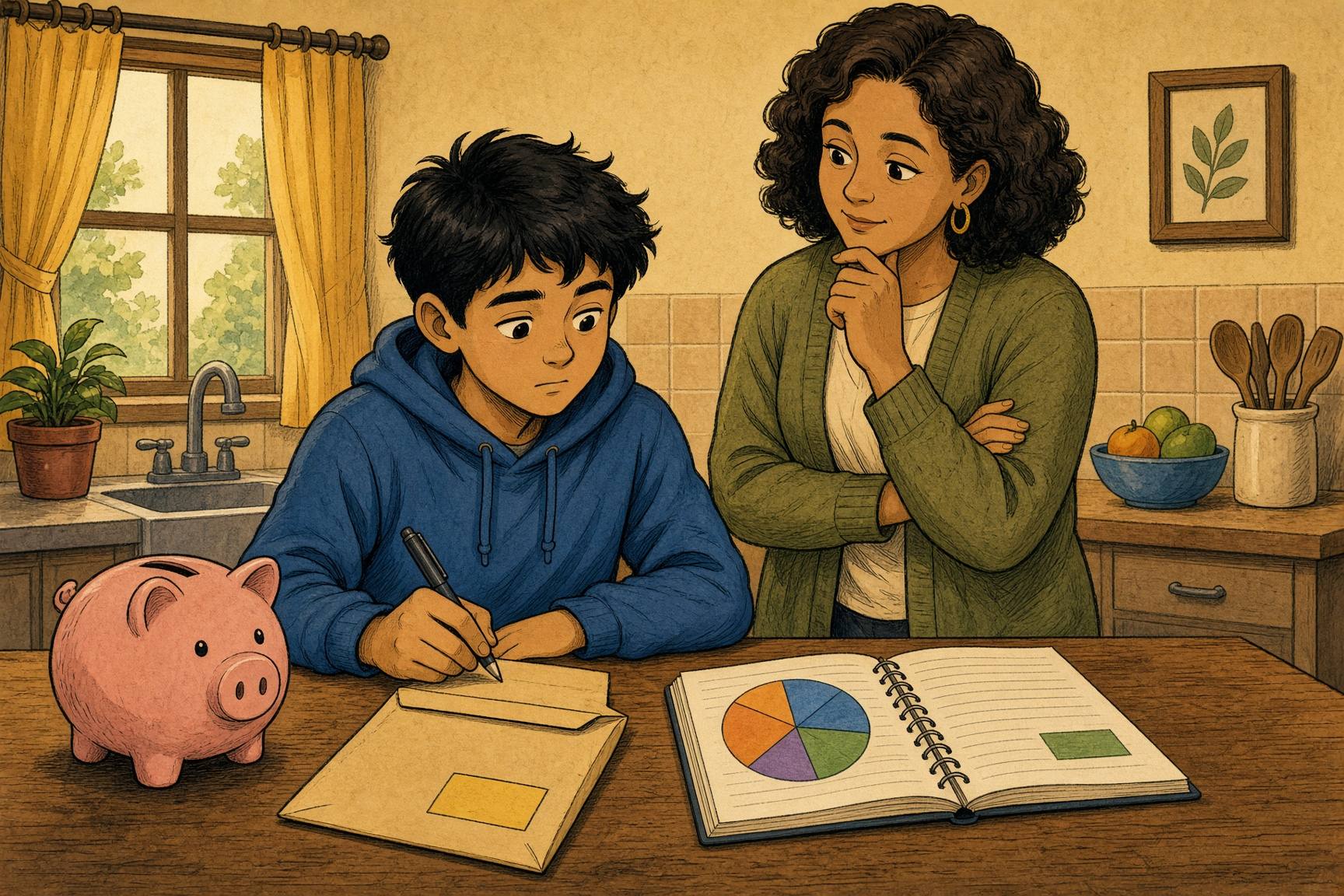
A paycheck is sitting on the kitchen table. Wages are the dollars you got paid. Income tax is a cut taken out of those wages. Earn $400 with 10% income tax and they take 0.10 × 400 = $40. Take-home pay is what is left: $360. Sales tax is different — extra money added when you buy something. Use the tax rate stated in the question.

A budget is how you split the money that comes in: rent, food, savings, and whatever is left. Rent at 30% of $2,000 is 0.30 × 2,000 = $600.

Assets are what you own that is worth money: cash, a bike, a phone. Liabilities are what you still owe, like a loan. Net worth is one subtract: what you own minus what you owe.

A bank may pay you interest: extra money earned on savings. With simple interest, each year uses the same starting amount, called the principal. For example, $300 at 4% per year earns $300 × 0.04 = $12 each year. In 2 years it earns $24. The formula is I = p × r × t: I is interest, p is principal, r is the yearly rate as a decimal, and t is time in years.

Compound interest means previously earned interest can earn interest too. At 10% per year, $100 earns $10 in year 1, giving $110. Year 2 earns 10% of $110, or $11, giving $121. Multiplying by 1.10 keeps the full balance (100%) and adds 10%. With the same starting amount and positive yearly rate, yearly compound interest earns more than simple interest after more than one year.

Examples

Try it. Then open the steps.

Example 1 of 5

Income tax on wages

A paycheck on the kitchen table

Kim earns $350 in wages (the money she is paid). Income tax is 8% of wages — a cut taken out before she gets the cash. How much tax is taken out? What is take-home pay (what she actually keeps)?

Example 2 of 5

A monthly split

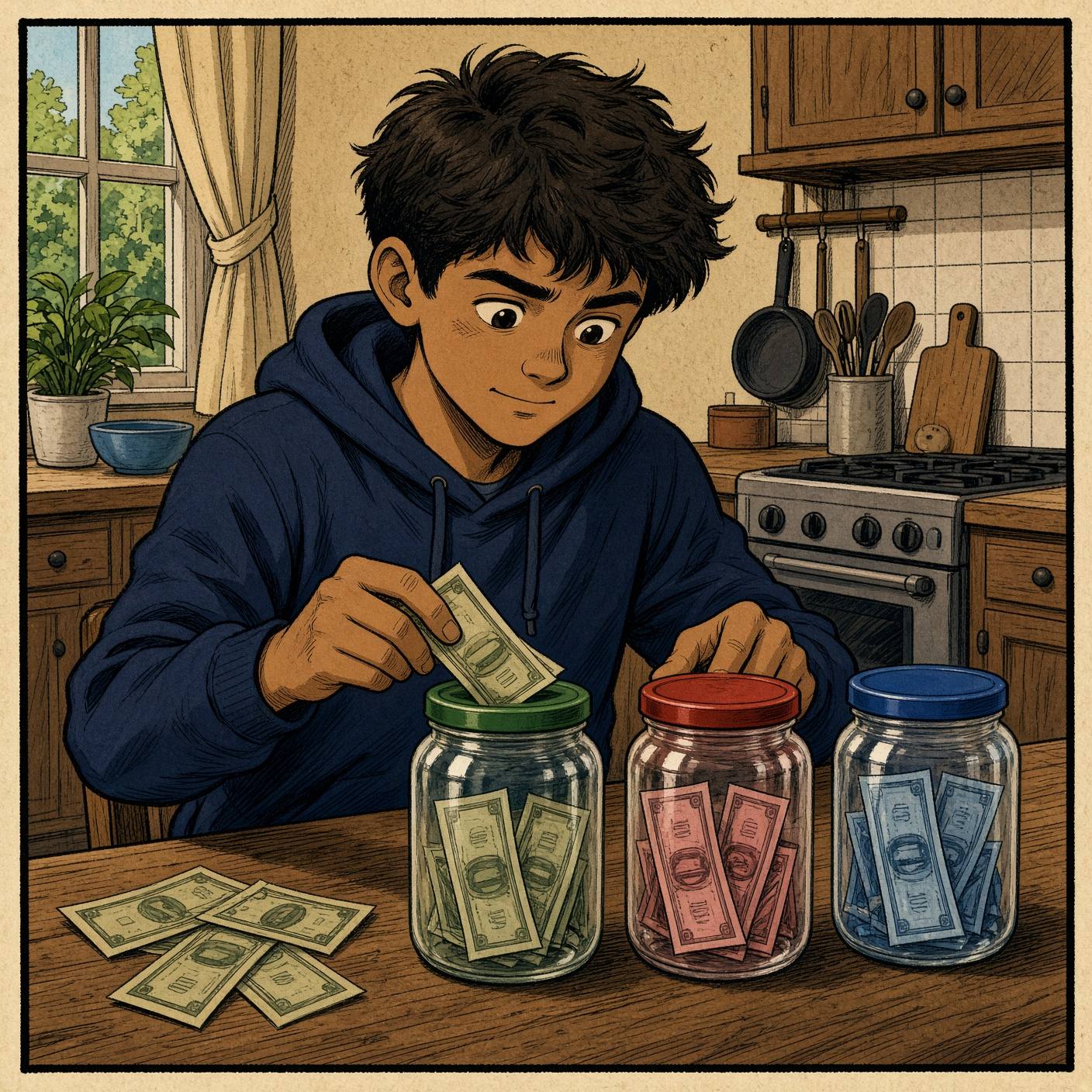
Cash in three jars

Income is $2,000. Housing is 30%, food is 15%, savings is 10%. How many dollars go to housing?

Tape diagram. Parts: housing 30%, food 15%, save 10%, rest 45%. Total $2,000.
housing 30%
food 15%
save 10%
rest 45%

total $2,000

Example 3 of 5

What you own minus what you owe

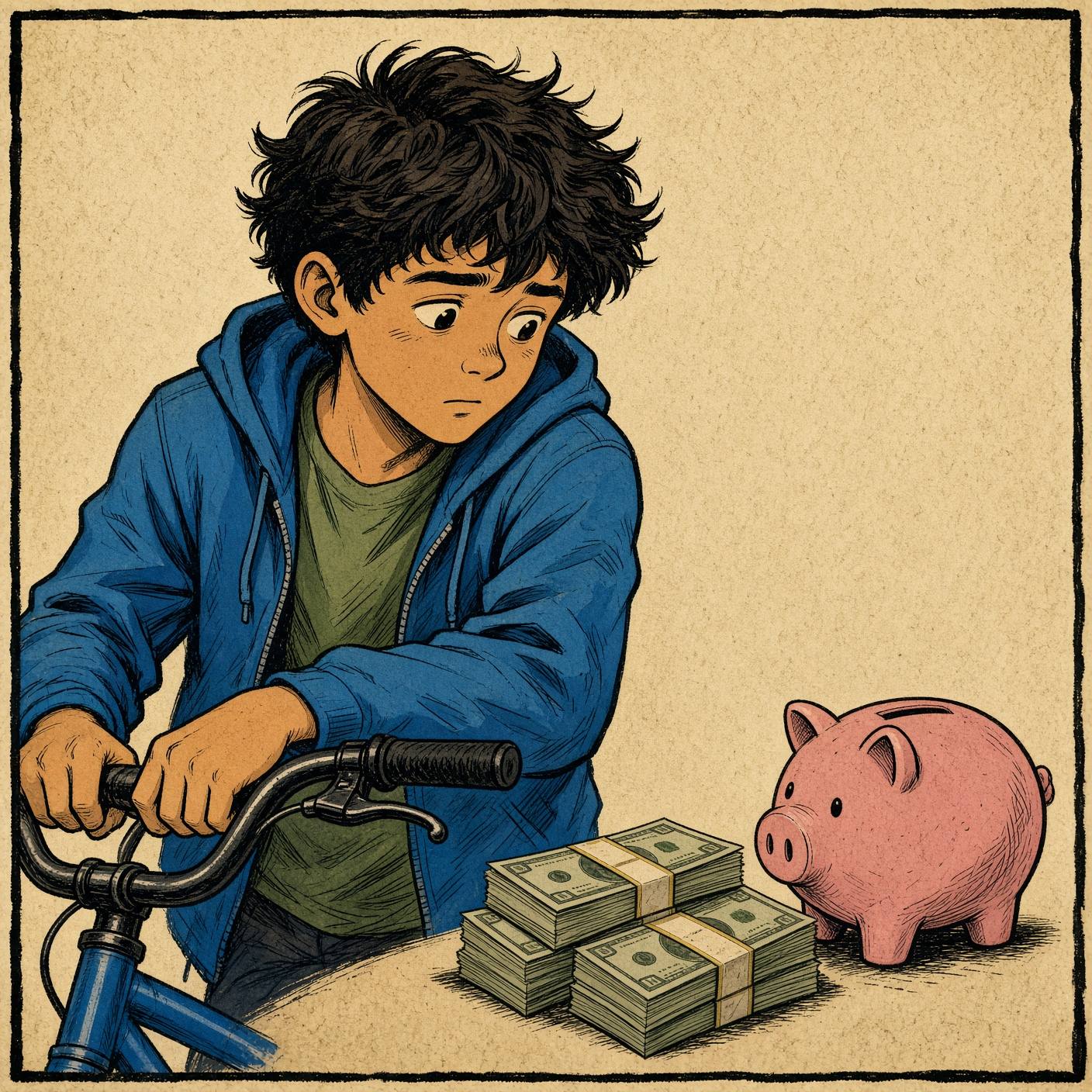
A bike and a little cash

Cash $80, bike $120. Those are assets — things you own. You still owe $50 on the bike. That $50 is a liability — money you still have to pay back. Net worth is assets minus liabilities. What is your net worth?

Table. Columns: Item, Type, Dollars. Rows: cash, asset, 80; bike, asset, 120; bike loan, liability, 50.
ItemTypeDollars
cashasset80
bikeasset120
bike loanliability50

Example 4 of 5

Simple interest

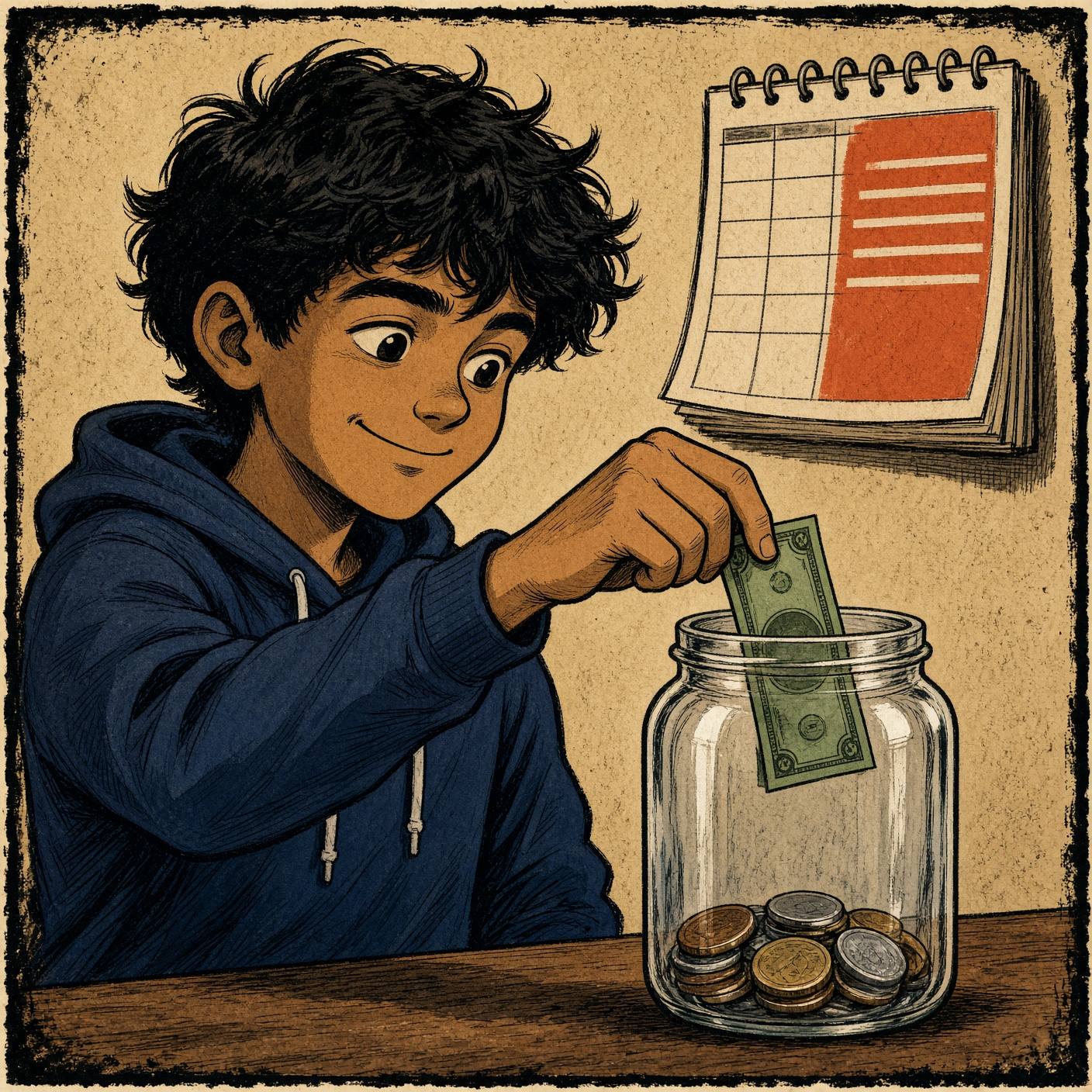
Savings earning interest in a bank account

You save $300. The bank pays 4% simple interest for 2 years. Simple means: each year they pay 4% of the starting $300, then add those years together. In letters: I = p × r × t, where p is the starting $300, r is 0.04, t is 2 years. How much interest?

Example 5 of 5

Simple vs compound, two years

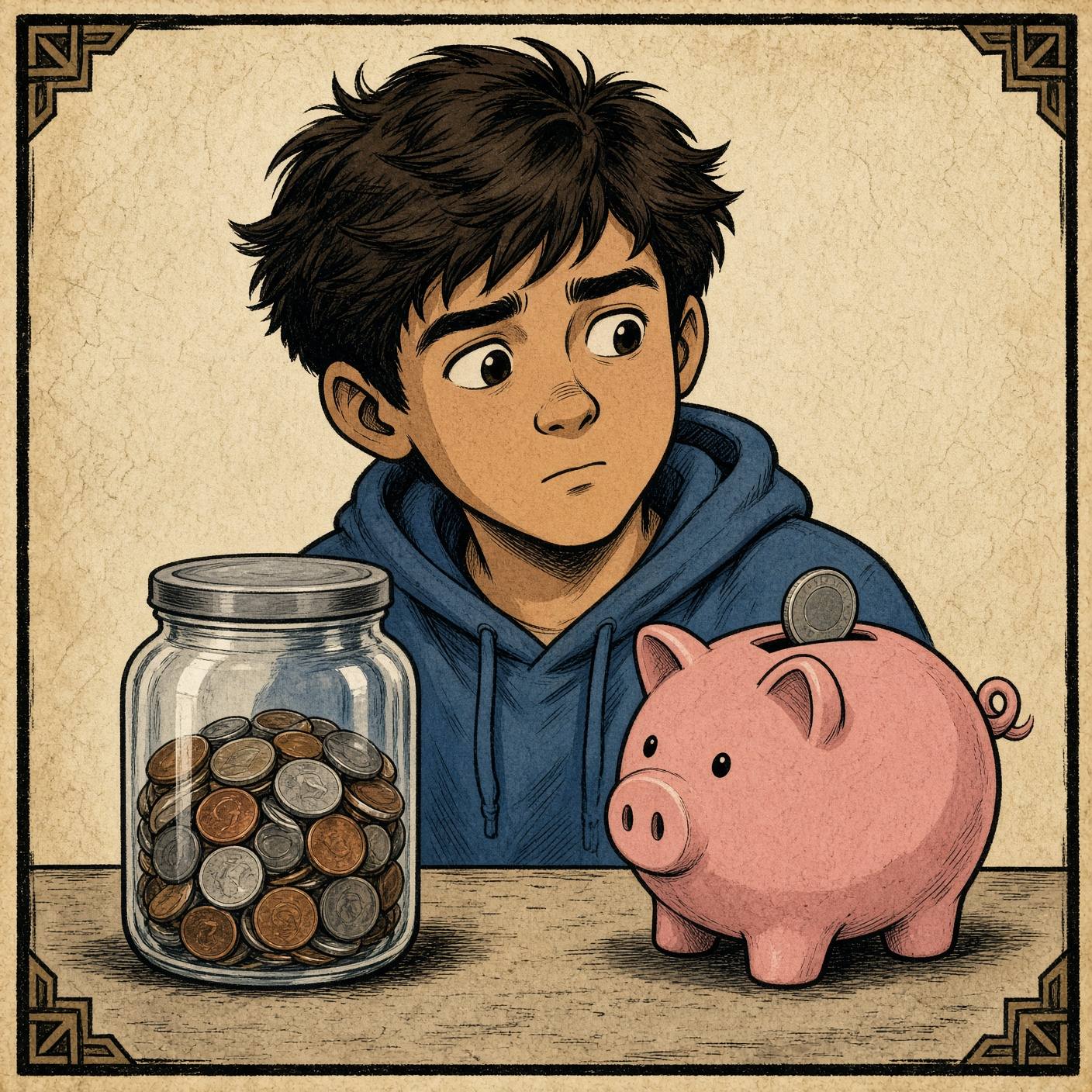
Two savings accounts, two ways to calculate interest

You put $500 in the bank at 10% per year for 2 years. Simple interest uses the starting $500 both years. Compound interest means year 2 also pays 10% on last year’s extra. Simple amount? Compound amount (starting × 1.10 × 1.10)? Which earns more, and by how much?

Things to watch for

  • Easy to miss: Adding income tax to your pay instead of subtracting it when finding take-home pay. Another trap is using 8% when the stated rate is 8.25%.

    Do this: Income tax is percent of wages. Sales tax is percent of the price. Write 8.25% as 0.0825.

  • Easy to miss: Leaving r as 5 instead of 0.05 in I = prt, or using simple interest when the problem says compound.

    Do this: Turn the percent into a decimal first. 5% is 0.05, not 5. Simple is I = p × r × t. Compound for 2 years is starting × (1 + r) × (1 + r).

24 problems · Camp, Trail, Summit