All topics

Probability

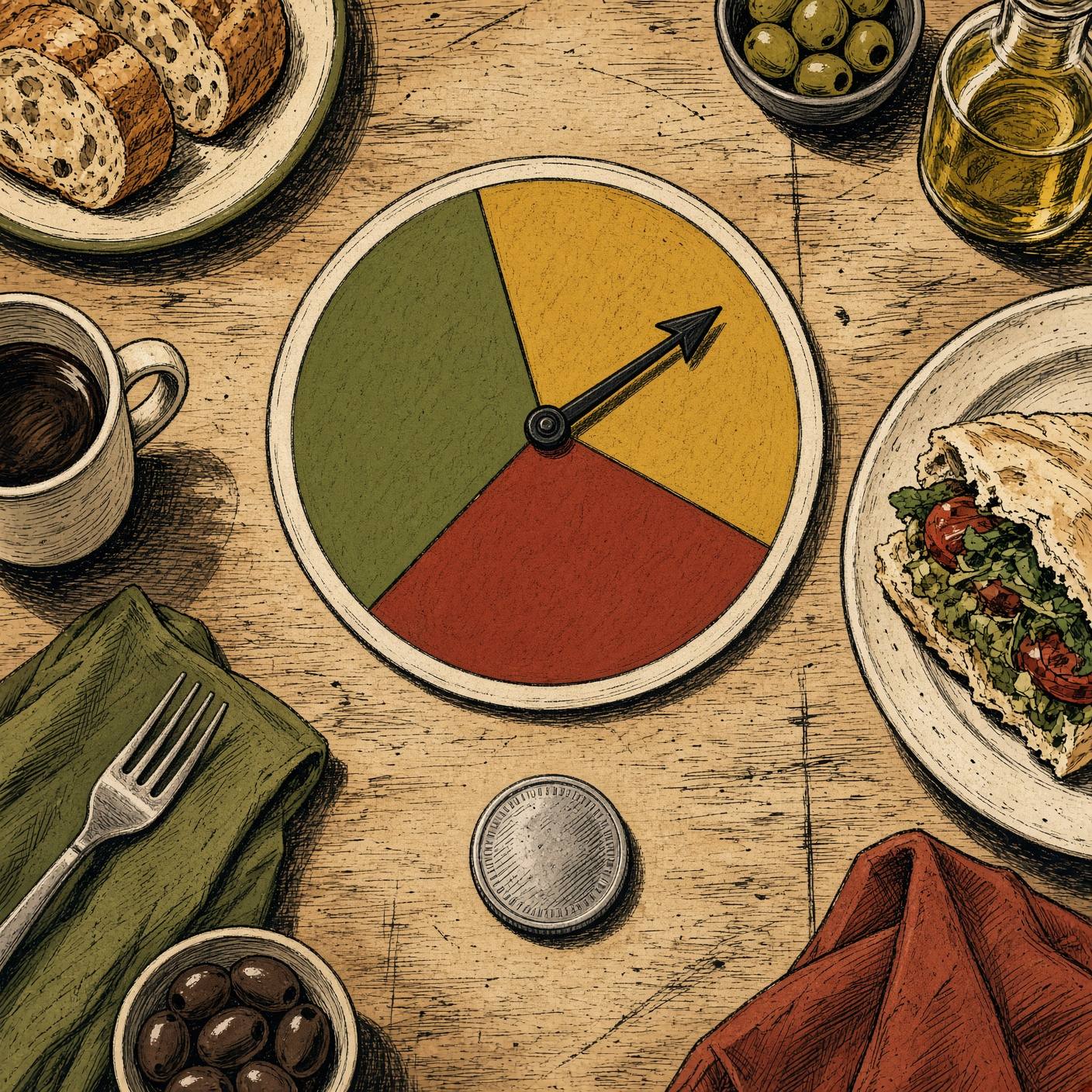
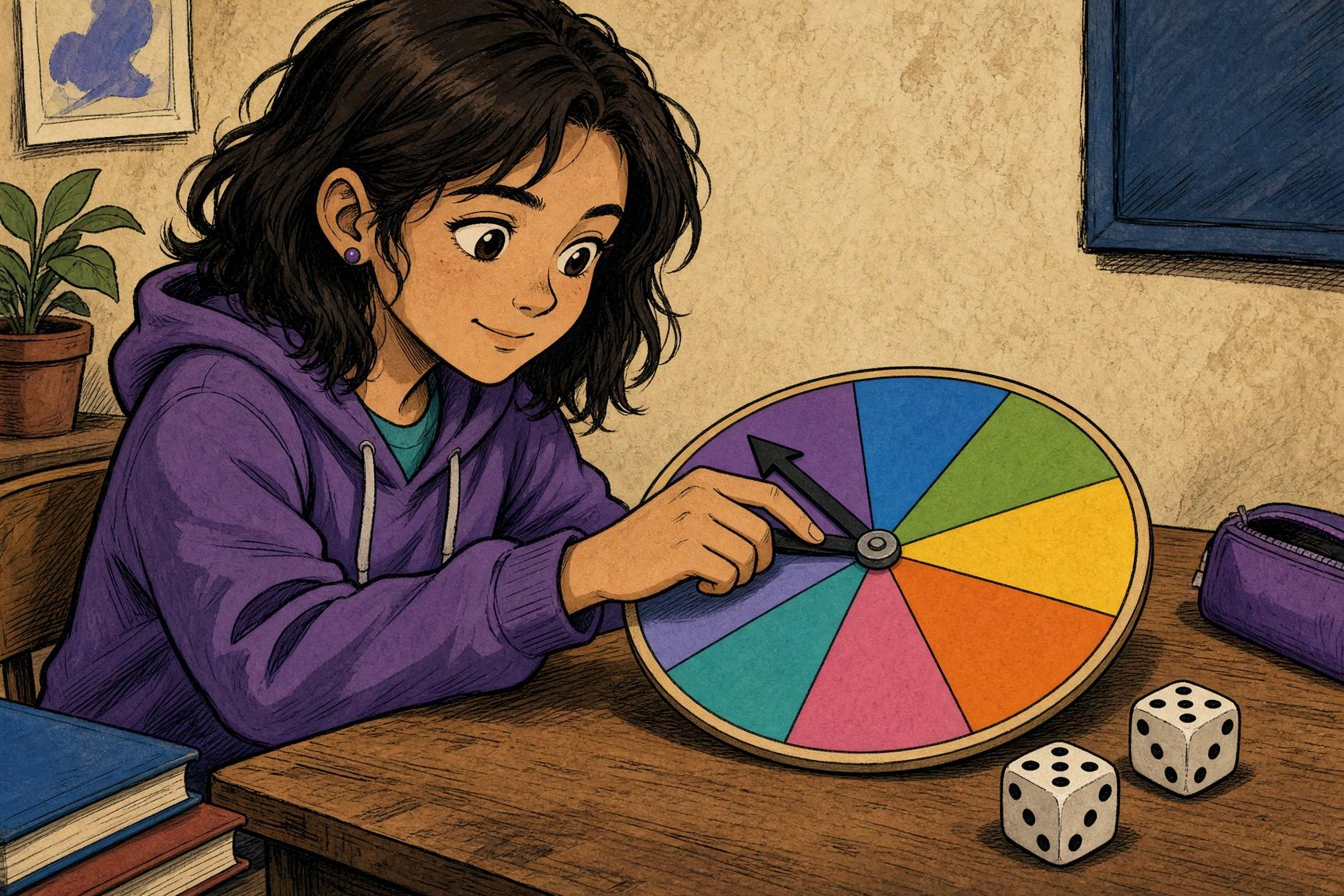
A spinner, a die, and the chance it is not red.

PracticeSolution key

In plain words

Probability tells how likely something is: 0 means impossible and 1 means certain. An outcome is one possible result. For a fair coin, heads and tails have the same chance. P(heads) means “the probability of heads,” which is 1/2. When all outcomes are equally likely, divide the number that fit the question (favorable outcomes) by the total number of outcomes.

The sample space lists all possible outcomes. A coin’s sample space is heads and tails. For a die labeled 1 to 6, it is 1, 2, 3, 4, 5, 6. The complement of an event includes all outcomes outside that event. For “red,” the complement is “not red.” Their probabilities total 1, so P(not red) = 1 − P(red).

Theoretical probability uses a mathematical model. For a fair coin, two equally likely sides give a heads probability of 1/2. Experimental probability uses actual results: if 7 of 20 flips are heads, it is 7/20. Each flip is one trial, or try. These probabilities need not be equal. Events are independent when knowing one result does not change the chance of the other. For independent events, multiply to find the probability that both happen: P(A and B) = P(A) × P(B).

Examples

Try it. Then open the steps.

Example 1 of 5

Coin and spinner

A fair coin and a spinner with 1, 2, 3

Flip a fair coin and independently spin a spinner with three equal sections labeled 1, 2 and 3. What is P(heads and 2), as a simplified fraction?

Table. Columns: , 1, 2, 3. Rows: H, H1, H2, H3; T, T1, T2, T3.
123
HH1H2H3
TT1T2T3

Example 2 of 5

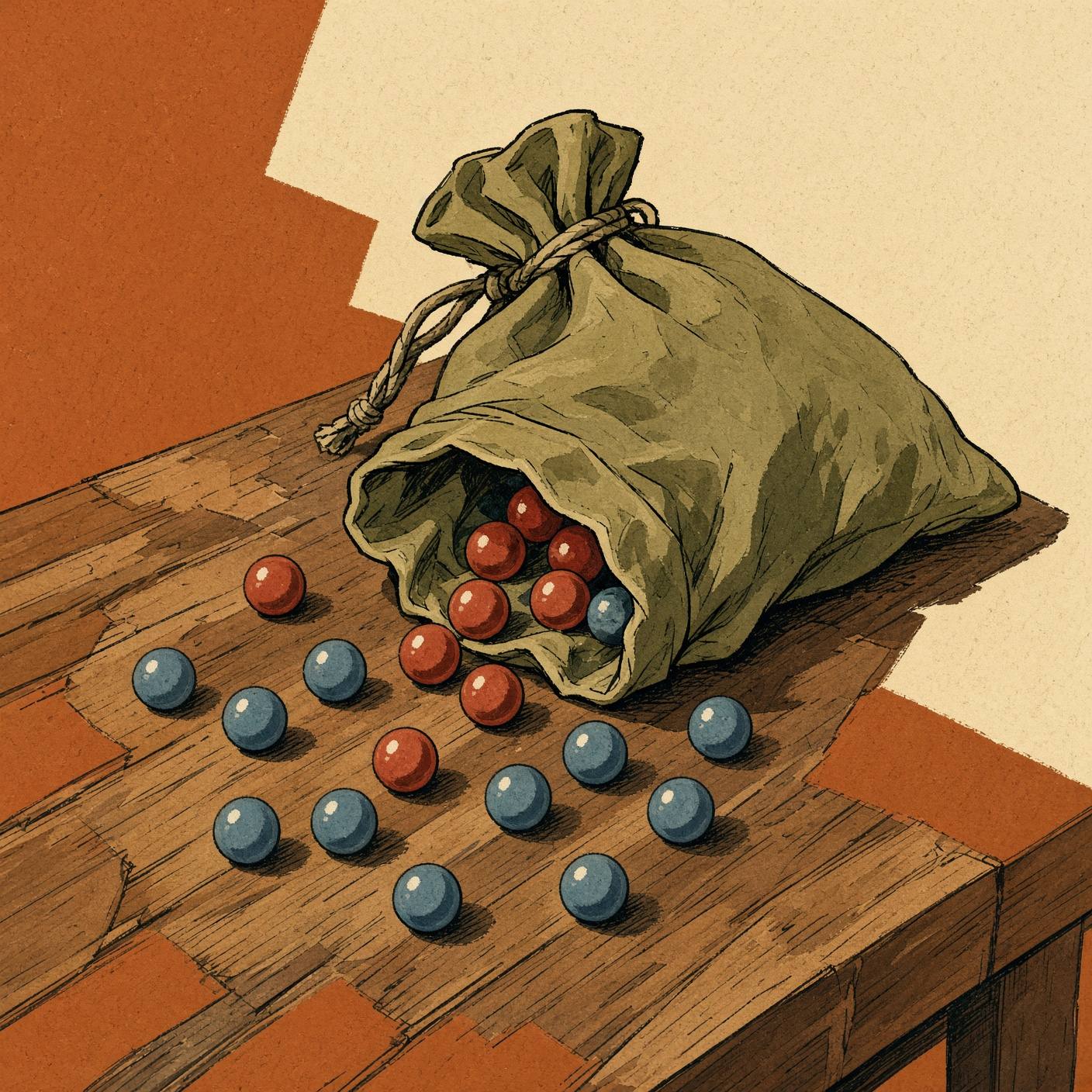
The marble bag

A bag at the grocery prize table

A bag has 3 red marbles and 5 blue marbles. You pick one at random. P(red)? P(not red)?

Example 3 of 5

Practice shots

Soccer practice, 25 shots

A soccer player scores on 18 of 25 shots. What is the experimental probability of scoring, as a simplified fraction? If she takes 50 shots at that rate, how many goals do you predict?

Table. Columns: Result, Count. Rows: make, 18; miss, 7; total, 25.
ResultCount
make18
miss7
total25

Example 4 of 5

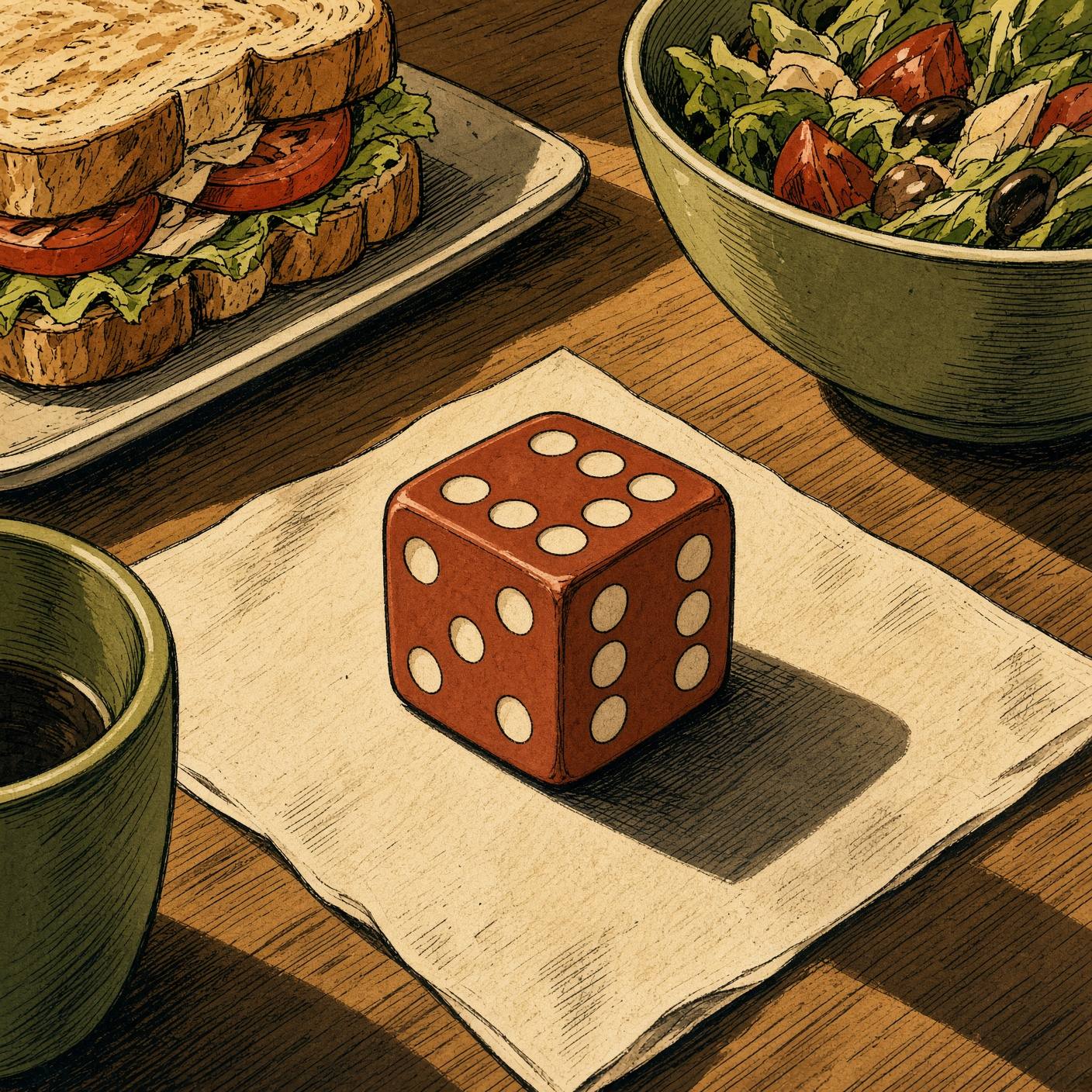
The number cube

A fair number cube has faces 1 through 6. What is P(even)? What is P(greater than 4)?

Example 5 of 5

Two at once

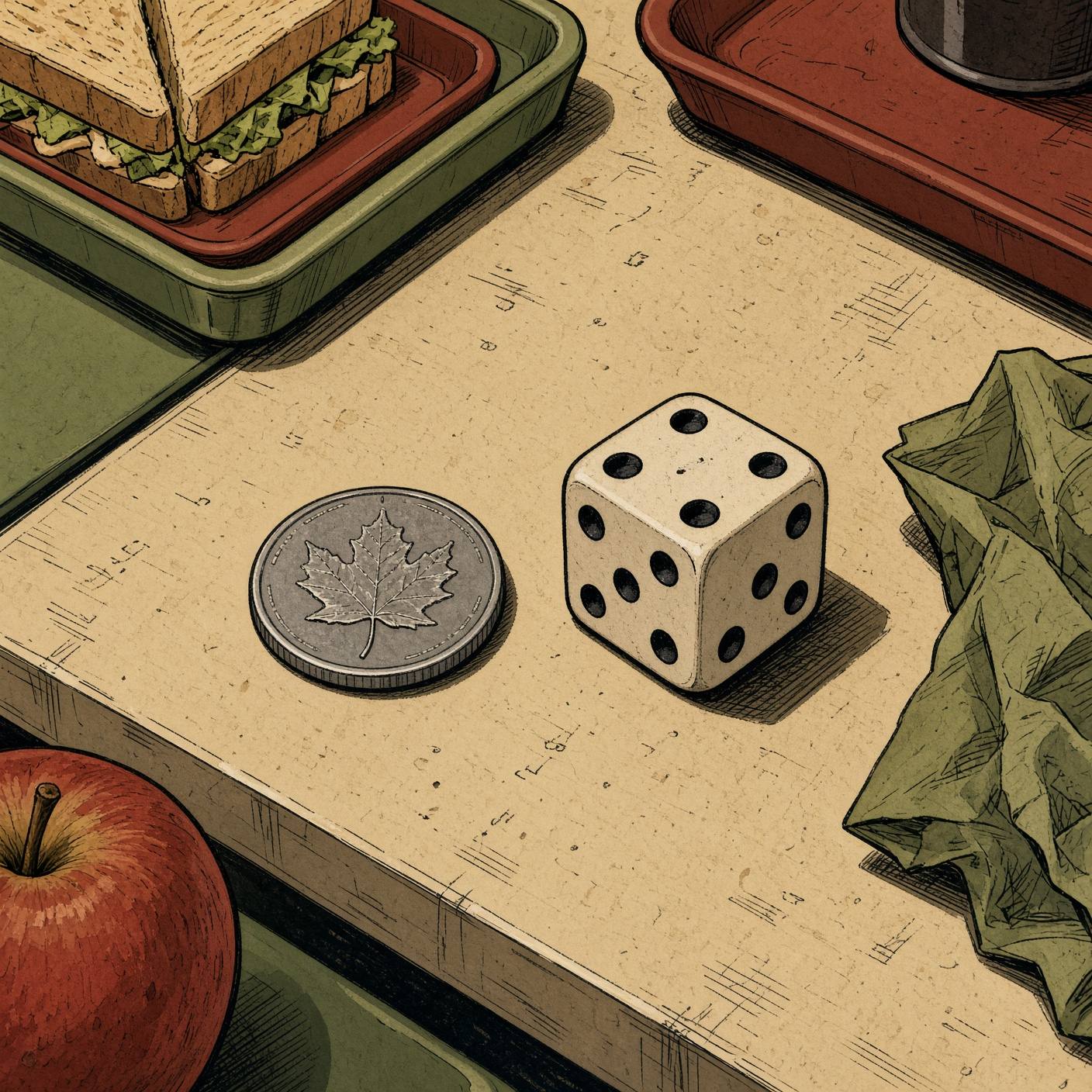
A coin and a number cube on the lunch table

You flip a fair coin and roll a fair 1–6 cube. They do not affect each other. P(tails and 6), as a simplified fraction?

Things to watch for

  • Easy to miss: Adding the two chances when both have to happen. P(heads) + P(6) is not P(heads and 6).

    Do this: For independent events, both at once means multiply: (1/2) × (1/6) = 1/12. First make sure one event does not change the chances of the other.

  • Easy to miss: Mixing up what the math predicted with what actually happened, or leaving a fraction unsimplified when it asks you to simplify.

    Do this: Theoretical comes from the list of outcomes. Experimental comes from what you tried. Simplify unless the problem says not to.

24 problems · Camp, Trail, Summit